
'It is in the interest of both sides that the visit of the US President is seen as being successful. Both sides have invested considerable political capital in it. This rapid exchange of visits and the decisions taken have to be justified, beyond the symbolism, which is no doubt important in itself. This opportunity to impart a fresh momentum to ties should not be missed,' says former foreign secretary Kanwal Sibal.

Very few old-style RSS workers-turned-leaders have survived Narendra Modi's political ambush in state politics. Harin Pathak's end closes the chapter for Modi who started his post-2002 riots journey with a new mix of profit-centric development and middle class-pleasing commerce, technology-driven communication with voters, and an unspoken Hindutva that speaks only through posturings and symbols. Rediff.com's Sheela Bhatt reveals the real reasons for the Modi-Pathak rupture.

'In the first meeting of this new year, we took a joint new year resolution that we will complete it this year. At the time things were not very clear, but the mood was clear that yes, we must resolve it.' 'Yes, details have to come out, but there are some sensitivities, there are some stake-holders not yet on board, especially other Naga undergrounds etc, we would like them to come on board... So at a proper time it has to be revealed to the country, and to the legislature. Perhaps, we may have to wait for some more time.' 'With better understanding of the Indian system, many of them have learnt, realised, appreciated that Naga nationalist aspirations can be accommodated in the Indian system. The Indian system is pretty comprehensive and flexible.' 'A Naga has as much stake, claim over India as any other Indian. There is no distinction. This, Nagas have realised, that yes, Naga nationalist aspirations and Indian nationalism are not mutually exclusive.' Ravindra Narayan Ravi, the Government of India's Special Interlocutor for the Naga talks, explains how the Naga Peace Accord was reached in an exclusive interview to Saisuresh Sivaswamy/Rediff.com

Two whole weeks after he landed on his feet in unfamiliar territory, Patrick Ward records what it is to be a parachute journalist in the chaos called India

'The evidence about a plane crash that killed Netaji as stated in the Shahnawaz Committee report, is quite strong.' 'None of the files that I read bear any evidence that it was Nehru who ordered this kind of intrusive surveillance.' 'The government's excuse that declassifying some files may affect India's relations with friendly foreign countries is not a credible one.' Subhas Chandra Bose's grand-nephew and Trinamool Congress MP Sugata Bose on reports that his family was under surveillance for 20 years and the rumours over Nataji's death.

The administration and America Inc have invested in Narendra Modi's power to transform India. Aziz Haniffa/Rediff.com reports from Washington, DC.
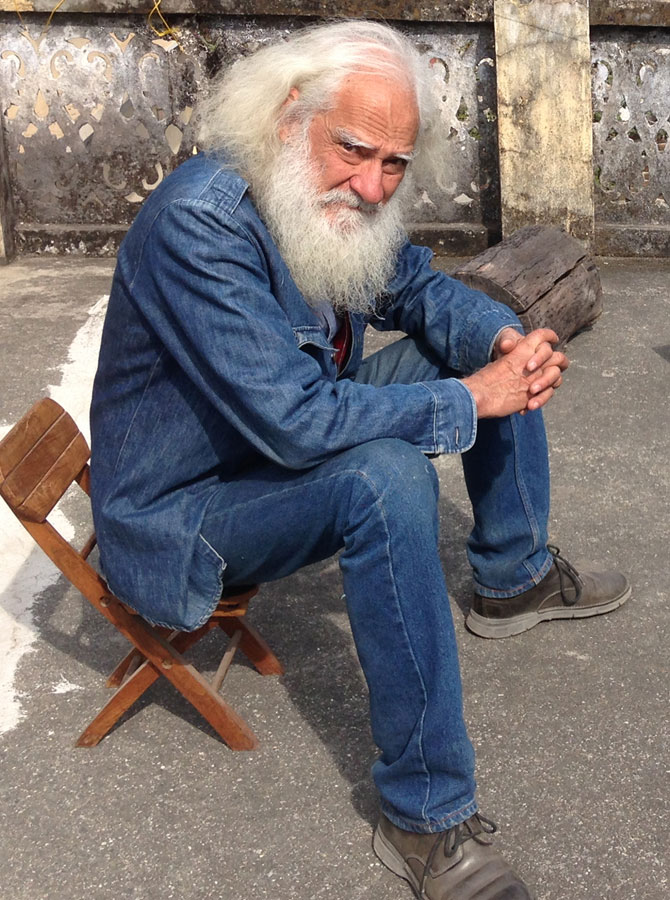
'Not allowing people to speak or listen is the biggest act of anti-nationalism,' says Arvind Krishna Mehrotra, one of India's finest poets.

Under threat from the Maoists, and jailed by the police, AAP's Soni Sori plunges into the election for all she holds dear. Aman Sethi reports

'If you say I won't talk to them at all, does terrorism stop?' 'Even if they say they will give up terrorism, "I will fight terrorism along with you," but even then you say I still won't talk to you until you do the following things, then that is a political call.'

'In her insecurity, she destroyed the institutions of democracy,' says Khushwant Singh.
 © 2026 Rediff.com - Advertise with us - Disclaimer - Privacy Policy - Sitemap - Feedback - About us - Terms of use - Grievances